Peace is not merely the absence of conflict — it is the active presence of understanding, justice, and compassion. We advance that vision through education, dialogue, and rigorous research.
To promote peace, dialogue, and cooperation among all people by providing education, resources, and opportunities for connection across cultures and borders — and by confronting the unresolved injustices that keep conflict alive.
A world where differences are met with curiosity rather than fear, where historical wrongs are addressed with honesty rather than denial, and where every community has the tools to resolve conflict peacefully and thrive together.
Global Peace International was founded on the conviction that lasting peace requires more than goodwill — it requires truth. Too often, conflicts are declared "resolved" while the injustices that caused them remain untouched: lands taken, crimes unacknowledged, and populations dispossessed.
We believe that remembrance without remedy is not justice. Our work examines how past atrocities shape present realities — and how recognition, law, and moral courage can finally close the gap between acknowledging a wrong and repairing it.
Through books, white papers, and public dialogue, we give lawmakers, advocates, educators, and citizens the evidence and frameworks they need to build a more peaceful world.

We follow the evidence wherever it leads, even when the conclusions are uncomfortable for governments, institutions, or accepted narratives.
Recognition is a beginning, not an end. We focus on the legal, political, and moral obligations that should follow once a wrong is acknowledged.
Understanding grows when people of different nations, faiths, and cultures meet in good faith. We build bridges, not walls.
Our publications draw on archives, treaties, government records, and international law — so that claims rest on documented fact.
Peace literacy belongs to everyone. We make our resources accessible to individuals, educators, and organizations alike.
Every person and every people deserves security, sovereignty, and the right to live free from fear and dispossession.
Examining genocide, dispossession, and the duty of states not to legitimize the fruits of crimes against humanity — with the Armenian Genocide as a central case study.
Producing books and resources that help readers of all ages understand the roots of conflict, the mechanics of propaganda, and the path to reconciliation.
Analyzing how international law addresses occupied territories, restitution, representation, and the consent of peoples in decisions that bind future generations.
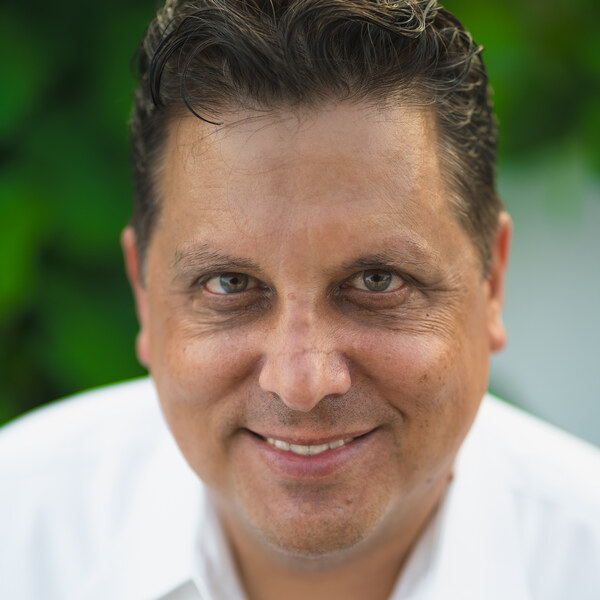
Ara Khachig Manoogian — born in 1965 in Pasadena, California — is an author, investigative researcher, and human-rights activist. Through his maternal line he is a descendant of the royal Bagratuni dynasty, which ruled Armenia from the 9th to the 11th centuries; he is also the grandson of Shahan Natalie, the mastermind behind Operation Nemesis, and the nephew of the late Archbishop Torkom Manoogian, Armenian Patriarch of Jerusalem. Through Global Peace International, he carries that inheritance forward, confronting unresolved injustice with documented fact.
For more than three decades his work has centered on Armenia and Artsakh, where he served the people as an investigative journalist and de facto ombudsman — exposing government corruption, human trafficking, and army abuse even when his findings were unwelcome to those in power. His central conviction is as direct as it is demanding: recognition of a wrong is only the beginning, and remembrance without remedy is not justice.
Manoogian was born in 1965 in Pasadena, California, to Khachig Ivan and Sylva Natalie Manoogian. Through his maternal grandmother he descends from the royal Bagratuni dynasty, which ruled the Armenian nation from the 9th to the 11th centuries; his maternal grandfather, Shahan Natalie, organized Operation Nemesis, which targeted the Young Turk leaders responsible for the Armenian Genocide. He first traveled to Armenia in 1989 as a videographer documenting a church-and-library relief project in the 1988 earthquake zone, and made repeated fact-finding trips to Armenia and Artsakh between 1992 and 1997, recording the daily lives of ordinary people to better understand their needs. From 1995 to 1997 he served as president of the Monte Melkonian Fund.
In 1998 he moved to the town of Martuni, Artsakh, where he coordinated aid-distribution programs and acted as a whistleblower on corruption in both Armenia and Artsakh — helping ordinary citizens secure their rights without paying bribes. Trusted by the population rather than appointed by the state, he came to serve as a de facto ombudsman: investigating wrongdoing and speaking out when others stayed silent. In 2000 he became the Artsakh representative of the Shahan Natalie Family Foundation. To confront falsehood with documented fact he founded thetruthmustbetold.com, and his white paper To Donate or Not to Donate was widely credited with exposing how donations to Armenia were being wasted. His anti-corruption work also drew intimidation and disinformation. In 2014 the Azerbaijani outlet Haqqin.az published a fabricated story — written by Lev Maas (also known as Lev Askerov), regarded as the first science-fiction writer in Azerbaijani literature — falsely claiming he had appealed to Azerbaijan for help against corrupt officials, and deriding him as a "Don Quixote" tilting at the windmills of corruption. He answered with a public rebuttal and an open letter demanding a retraction; none of it deterred him.
His investigative reporting has been covered by Radio Free Europe/Radio Liberty, Hetq, Keghart, Hraparak, and other outlets. He is a co-author of Desert Nights (2006), a book and documentary that exposed an international human-trafficking network operating in Dubai, and of Betrayal: The Promise Never Kept (2019), which draws on declassified documents and his grandfather's private archive to uncover who was behind the Armenian Genocide and why. When Azerbaijan attacked Artsakh on September 27, 2020 — the first casualty near his Martuni home was a nine-year-old neighbor, Victoria — he and his fiancée Nanoor Shahin launched the "Disarm Azerbaijan" campaign and a hunger strike, petitioning the United States to enforce the 1992 OSCE arms embargo.
Since 2008, after his mother received Shahan Natalie's private archive, Manoogian has devoted himself to preserving and publishing that archive — and to the broader mission of Global Peace International: confronting unresolved injustice with documented truth, and insisting that the recognition of a wrong is meaningful only when it is followed by remedy.
Explore our books and white papers, or support the research that documents the truth and presses for justice.